
Eye tests
People with learning disabilities are much more likely to have serious sight problems. Many can’t easily say when something is wrong with their eyes or vision.
Regular eye tests are essential. They help protect sight and can spot other health issues, like diabetes or high blood pressure.
Everyone can have an eye test.
You don’t need to read or speak. With the right support, it’s possible.
Adults should have an eye test every year, or more often if needed. This can be at an optician’s practice or at home, if that works better.
We’ve worked with local eye care services to improve access for people with learning disabilities and autistic people. The Easy Eye Care pathway means longer appointments through opticians who have had additional training on supporting people with learning disabilities.
If someone you support hasn’t had an eye test recently or struggles to get one, our free resources can help.
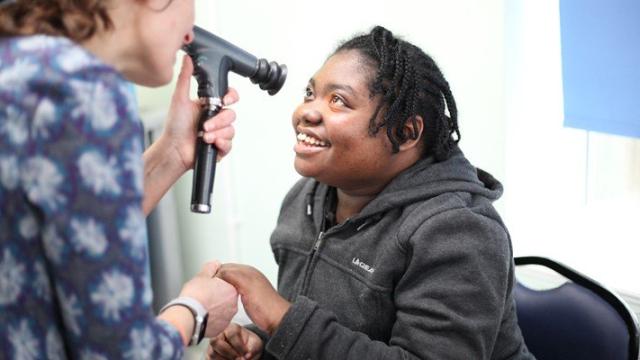
Booking and preparing for an eye test
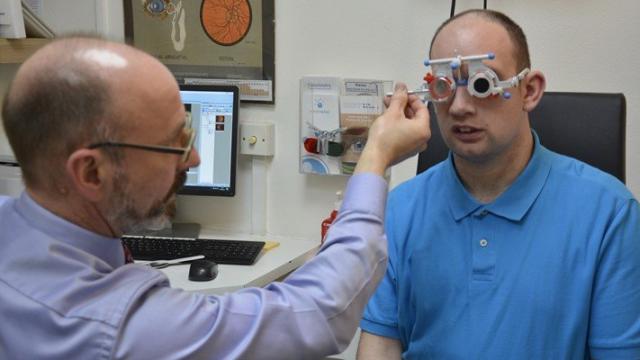
What happens at an eye test
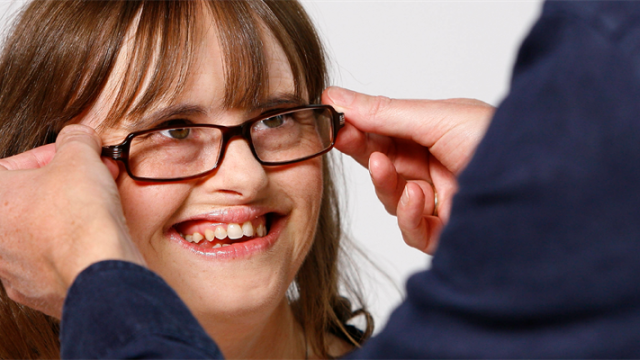
After an eye test
Find an optometrist
Search our database of optometrists and dispensing opticians who have shared information on their services for people with learning disabilities.
Eye care resources
Search our resources which have been created to help people with learning disabilities, families, supporters and eye care and learning disability professionals.
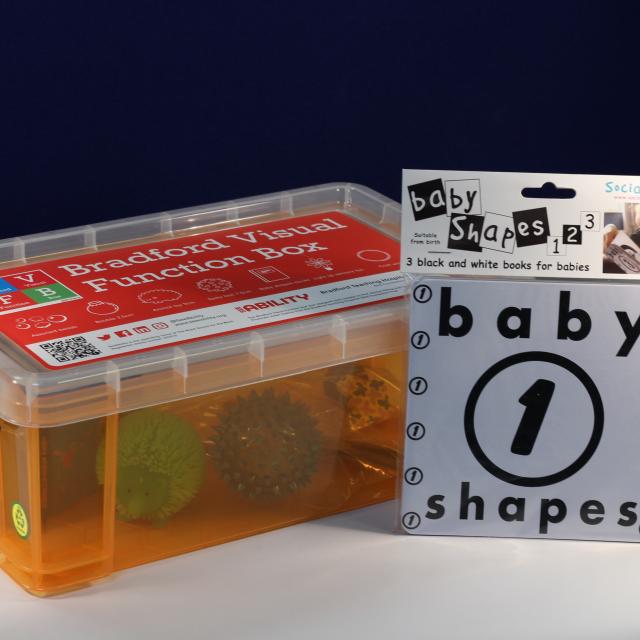
The Bradford Visual Function Box
People with learning disabilities are 10x more likely to have serious sight problems. But traditional eye tests can be challenging. The Bradford Visual Function Box's innovative approach means you don't need to communicate to have your eyes tested.
Everyone can have an eye test – you don’t need to be able to read or speak.
NHS England's Special School Eye Care Services
Based on our research, Government has committed to providing ongoing routine eye care and, when needed, glasses to all special school students.
If you are an eye care professional and you would like to use or adapt our forms, or want any help or advice in developing/improving eye care services for people with a learning disability, then please contact Steve Kill (National Manager - Eye Care and Vision) on 07738 040 307 or email s.kill@seeability.org.