
Sight loss support
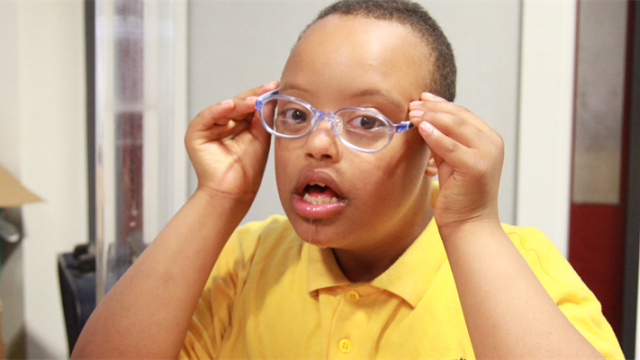
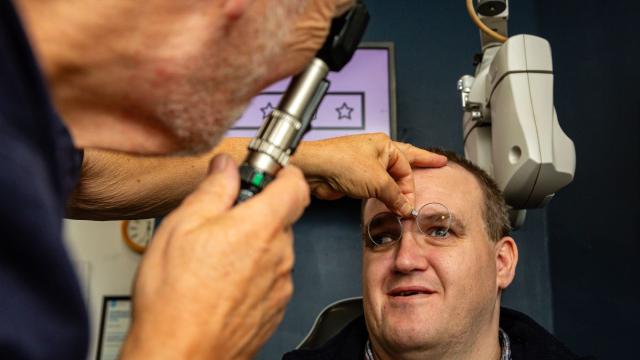
Everyone we support at SeeAbility routinely accesses an eye test at least once a year and has access to our unique specialist vision rehabilitation team.
The role of SeeAbility’s Vision Rehabilitation Specialists
Since we began as the Royal School for the Blind in 1799, SeeAbility has held a unique role. We are the only charity in the UK — and possibly globally — that focuses on the strong link between sight loss and learning disability.
Our research shows that people with a learning disability are ten times more likely to experience sight loss. This makes eye care a priority for us.
Our Vision Rehabilitation Specialists play a key role. They support people to manage the impact of vision impairments, reduce avoidable sight loss, and improve quality of life.
Sight loss can have a serious impact if it’s not identified or supported. Without the right help, people may face unnecessary risks and challenges in daily life.
Our commitment to eye care
We follow an Eye Care Charter. This means:
- Everyone we support has an eye test at least once a year
- Their eye health and vision needs are fully understood
- Support is built around those needs
All SeeAbility support staff receive training from our Vision Rehabilitation team. This includes learning how to:
- Be 'eye and vision aware' in their daily practice
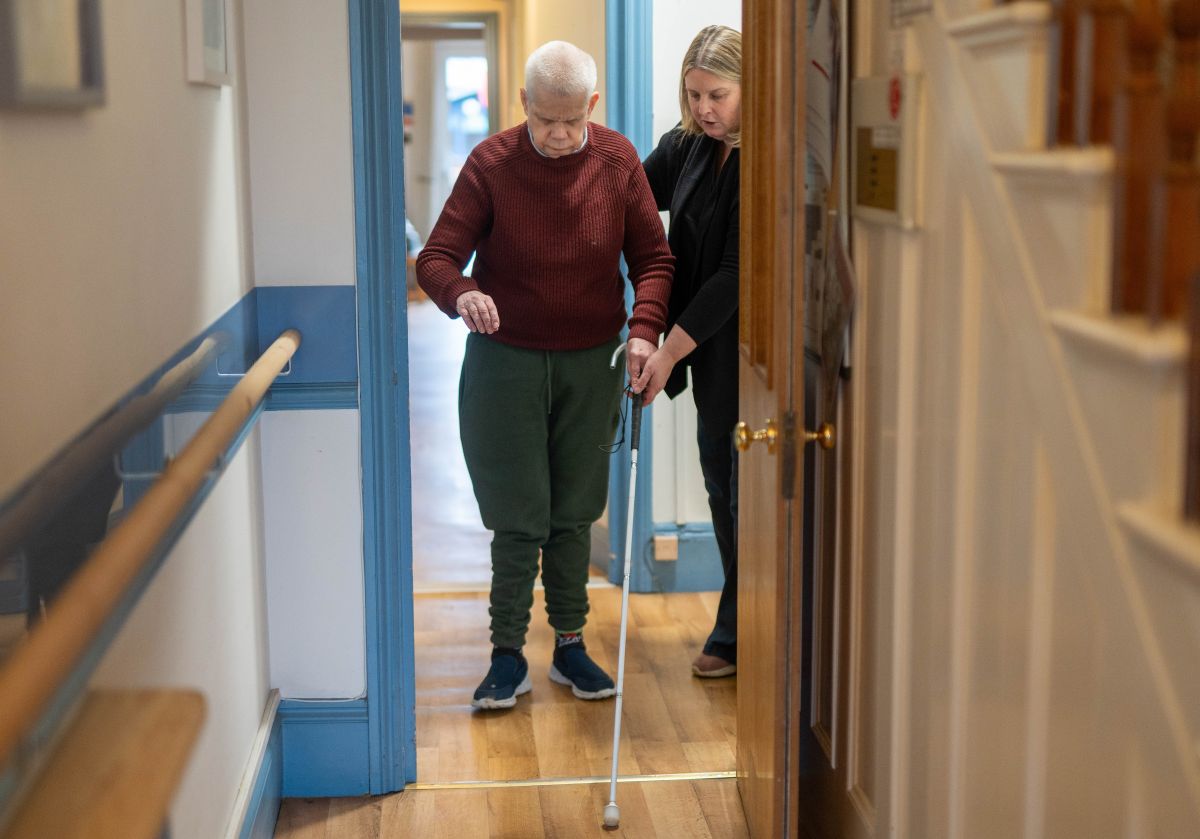
- Act as a safe and confident sighted guide
- Understand the specific needs of people they support with sight loss
What vision rehabilitation involves
Our Vision Rehabilitation Specialists assess each person’s needs. They provide personalised support to build skills, confidence and independence. This may include:
Independent living and daily tasks
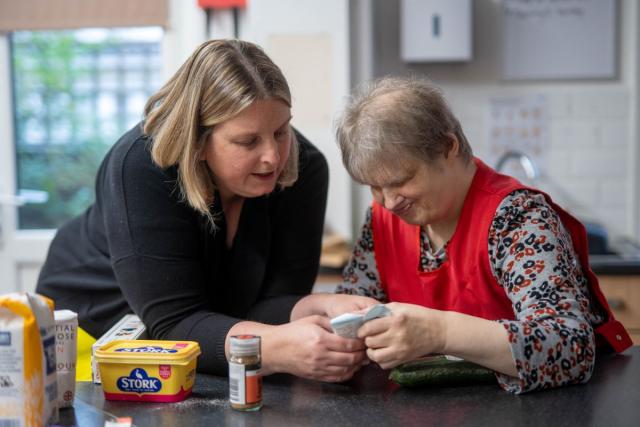
- Preparing and cooking meals and drinks
- Managing household tasks, like laundry or cleaning
- Handling personal care, such as getting dressed or shaving
- Using money and taking medication safely
Communication
- Using different formats like print, audio, Moon or Braille
- Supporting use of digital tools, such as tablets or smartphones
- Adapting devices with or without specialist software
- Helping people with dual-sensory loss communicate effectively
Orientation and mobility
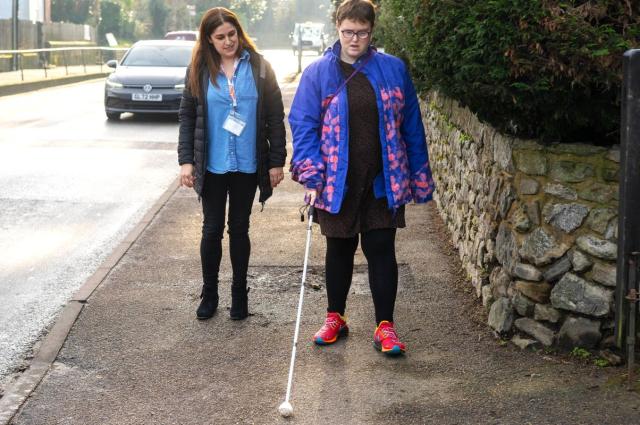
- Building confidence to move safely indoors and outdoors
- Teaching skills to understand and navigate the environment
- Using mobility aids, such as long canes
- Providing route training to places like shops or work
Low vision support
- Working with NHS low vision services
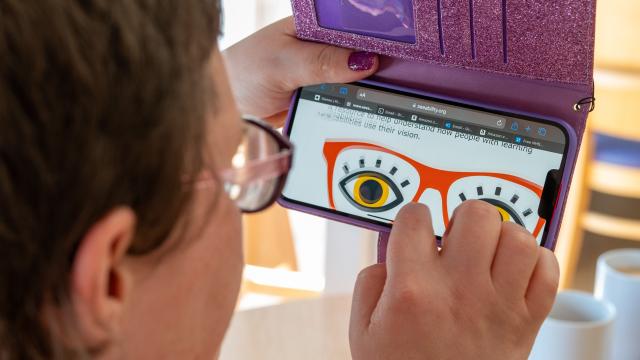
- Helping people use their remaining vision
- Supporting the use of magnifiers, lighting and other aids
Other areas of support
- Recommending environmental adaptations
- Understanding the emotional impact of sight loss
- Providing support for families and carers
- Signposting or referring to local services, including health, education, welfare and employment
- Supporting people to express their views, needs and culture
External training and consultancy work
Please contact eyecare@seeability to enquire about outreach training and consultancy work from the team for people not receiving a social care service from SeeAbility.
You might also be interested in
Eye tests