
Adam’s story - Why vision rehabilitation matters
Adam has been supported by SeeAbility for more than ten years. Although he is mostly non-verbal, his warm smile and contagious laugh make him much loved by everyone who knows him. Adam is autistic and lives with Rubenstein-Taybi Syndrome, which means he has a learning disability and other complex health needs.
Adam is usually full of life, so when he became quieter, more withdrawn, and often distressed, his family and support team knew something was wrong. It was upsetting to see him lose interest in the things that usually made him happy.
When SeeAbility’s vision rehabilitation specialists were called in, they discovered that Adam had a dense cataract in his right eye and advanced glaucoma in both eyes. For anyone, this would be life-changing. But for someone with a learning disability, sight loss can bring additional challenges - from increased anxiety and loss of independence to making everyday life feel overwhelming.
Sadly, people with learning disabilities are far less likely to get the help they need.
Vision rehabilitation steps in
Vision rehabilitation is about more than diagnosis. It is about understanding how sight loss affects each person and then putting in place the right support to help them keep their skills, confidence, and independence.
For Adam, this meant a whole team coming together. NHS and local authority specialists worked alongside SeeAbility colleagues, visiting Adam in his home so he could feel comfortable and understood while his needs were assessed.
Although Adam’s cataract surgery was not successful, his team learned more about how his sight loss affected him day to day. They adapted the way they supported him with things like making his environment safer, giving him more time to move around, and using touch and sound to help him understand what was happening.
These small but vital changes made a huge difference, and Adam began to feel safer and more settled again.
Overcoming barriers
Adam was offered a series of hospital appointments for his eye health, but he has a serious fear of hospitals and would not get out of the car. This made it extremely difficult to examine his eyes.
To try and ease this fear, his team set up a desensitisation programme with practice visits to the hospital. At times this was successful, and Adam was able to wait patiently for some of his appointments. However, delays and processes at the hospital made this much harder for him. Despite this, colleagues continue to liaise with the ophthalmology department to monitor Adam’s eye health as best they can.
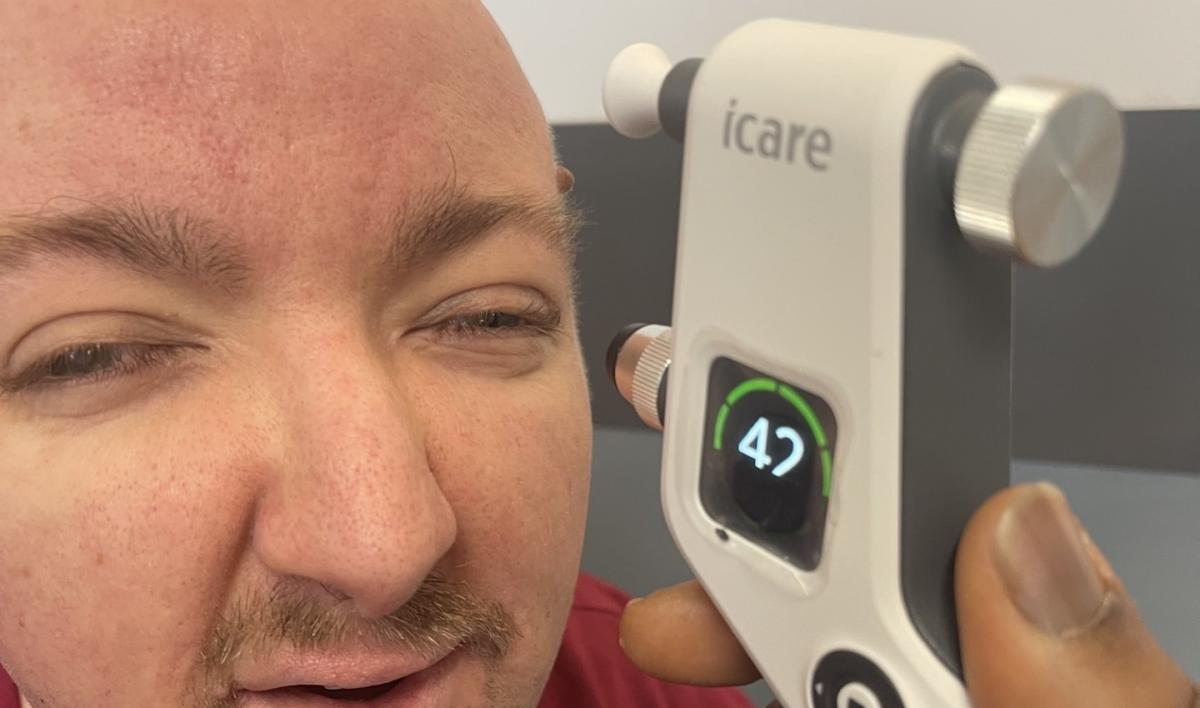
Because Adam’s eyes still needed to be checked, a specialist device called a tonometer was purchased on his behalf so that his eye pressure could be monitored at home.
Teamwork and dedication
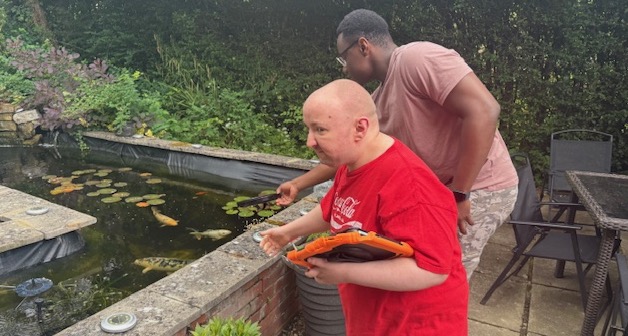
What has really made the difference for Adam is the dedication of his support team. They have gone above and beyond their usual duties - undertaking bespoke training, persevering with new skills, and working in close partnership with our vision rehabilitation specialists. This collaboration has allowed them to measure Adam’s eye pressure and adapt his support in ways that give him the best chance of protecting his remaining sight.
It has taken partnership, patience and creativity but together they have found ways to give Adam the right care.
For Adam, this support has meant comfort and reassurance. Instead of withdrawing further, he can continue to share his joy with those around him. His laugh still fills the room - a sure sign of his newfound confidence.
You might also be interested in
Sight loss support