
Adam’s story - Saving sight through vision rehabilitation
Vision rehabilitation is about more than a diagnosis. For Adam, it saved his sight.
Adam has been supported by SeeAbility for more than ten years. He is autistic and has Rubenstein-Taybi Syndrome, which means he has a learning disability and complex health needs. Although he is mostly non-verbal, Adam’s smile and infectious laugh light up the room and people who know him well can quickly tell when something is wrong.
So when Adam became quieter, more withdrawn and increasingly distressed, his support team knew something had changed.
A referral to SeeAbility’s vision rehabilitation specialists revealed the cause. Adam had advanced glaucoma in both eyes and a dense cataract.
Without the right support, he would lose his remaining sight.
For Adam, hospital appointments were extremely frightening. He would often become so anxious that he could not get out of the car, making it very difficult for specialists to monitor the pressure in his eyes. This was a vital test in monitoring his eye care.
But Adam’s team refused to give up.
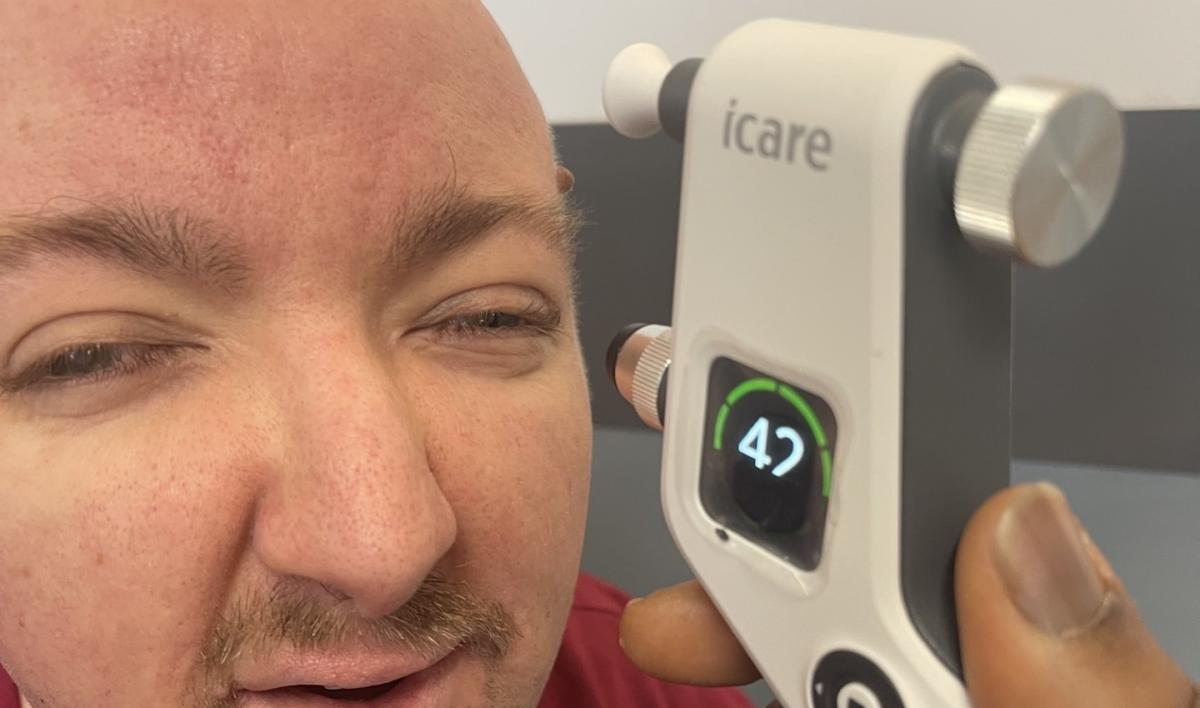
Working closely with NHS professionals and SeeAbility’s vision rehabilitation specialists, colleagues found another way to support him. A specialist tonometer was purchased so Adam’s eye pressure could be checked safely at home, in a place where he felt calmer and more comfortable.
Colleagues undertook bespoke training and learned new skills so they could carry out regular monitoring themselves. Together, they built an approach around Adam’s needs rather than expecting Adam to fit around the system.
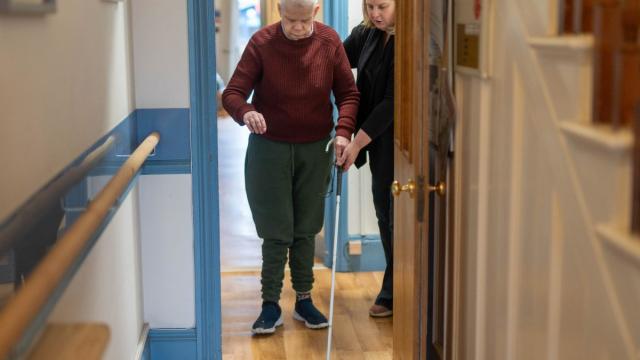
At the same time, the way Adam was supported every day was adapted to help him feel safer and more confident. His home environment was made easier to move around, colleagues gave him more reassurance and time, and touch and sound were used to support communication.
Slowly, Adam began to feel more settled again.
The changes may seem small, but they made a life changing difference to Adam’s quality of life. His team’s determination, patience and creativity helped protect his remaining sight while reducing the distress caused by repeated hospital visits.
Most importantly, Adam’s laughter returned.
This is why vision rehabilitation matters. With the right specialist support, people can stay connected to the world around them, protect the sight they have, and live safer, more confident lives.
You might also be interested in
Sight loss support