
SeeAbility’s Eye Care Champions promote easy eye care at Communication Works
SeeAbility’s Eye Care Champions have been busy over the past few months, visiting and exhibiting at Communication Works conferences up and down the country.
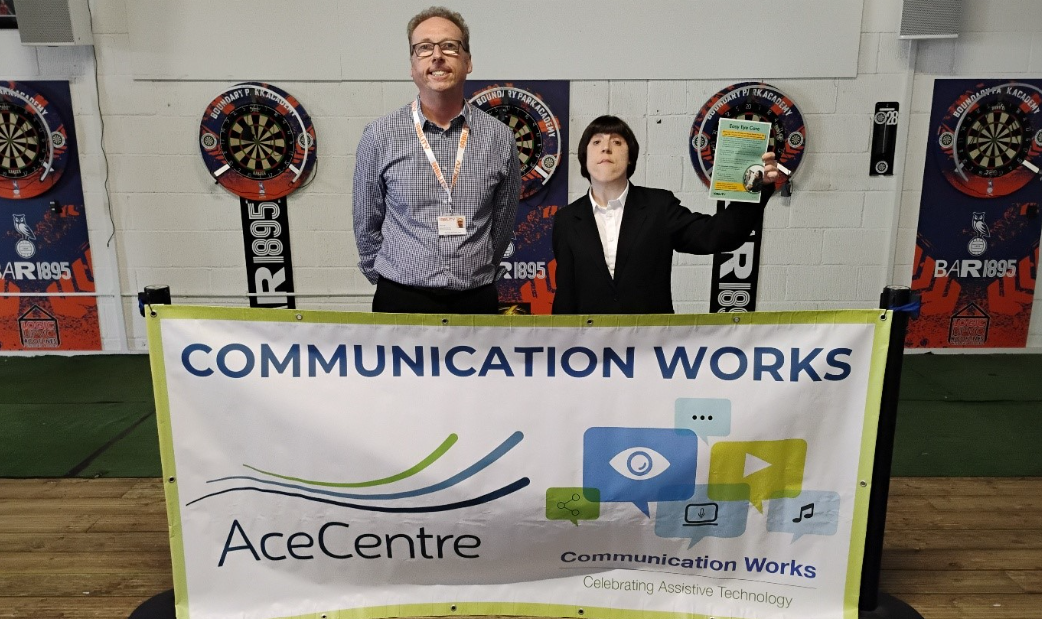
Communication Works, organised by CENMAC, is an annual conference which highlights the latest innovations in assistive technology. As technology becomes an increasingly important part of everyday life, nobody should be left behind. This year’s conference brought together people with lived experience (including our Eye Care Champions), educators, charities and technology providers to explore new tools which support people to communicate and live more independently.
As Rebecca Lunness, Eye Care Champion for the Northwest, puts it:
"Everyone has a right to communication. It’s really important to have a voice. With new technology, even people who are non-verbal can have a voice."
Rebecca was particularly excited by the Tobii Dynavox, known as an AAC (Augmentative and Alternative Communication) device. People who may be non-verbal, or who have difficulty speaking, can use it to communicate by selecting words, symbols or pictures on a screen, which the device then speaks aloud. If someone can’t press a button, some devices can even be controlled by eye movements. Rebecca commented:
“Someone can push a button and ask for a drink, to see a friend, and much more. If I was non-verbal, I would be able to press a button and the machine would say ‘I would like to go to the pub please’.”
It’s hard to overstate the impact that having access to communication devices like this could have for people who don’t otherwise have a voice. Whether it’s expressing a basic need, making a choice, or simply joining a conversation, such innovations can give people greater independence and control over their everyday lives.
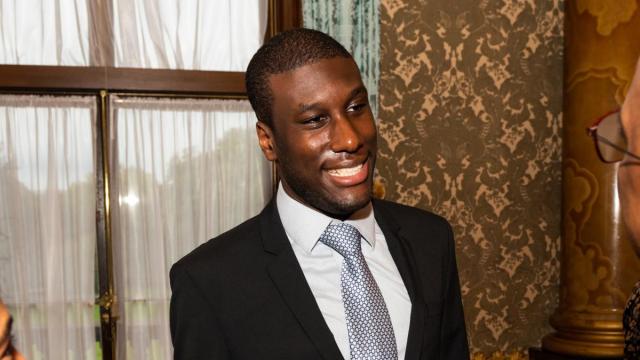
Lance Campbell, Eye Care Champion for London, commented:
"Technology like this could really make people who struggle to communicate have their voices heard. It’s key that people with learning disabilities and autism have an accessible way of expressing themselves."
Rebecca and Lance also represented SeeAbility with their own exhibition stands at Communication Works. As Eye Care Champions, they raise awareness of the high levels of both avoidable and unavoidable sight loss experienced by people with learning disabilities, and campaign to change that.
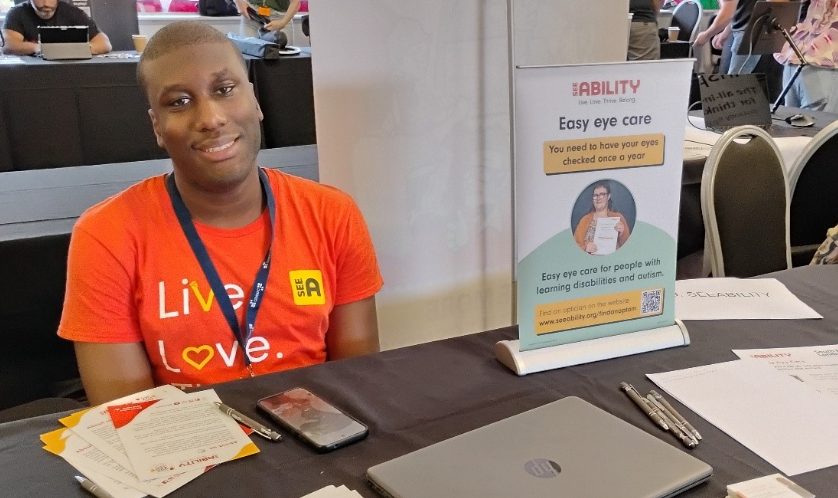
Lance shared:
"I went to Communication Works to promote eye care for people with learning disabilities and autism. It’s important for people to communicate in a way that’s comfortable for them, so that they can express themselves and share their experiences."
The event was the perfect place to share information about accessible eye care with people with lived experience, family members and professionals. Lance added:
"People from different organisations came to visit our stands, and some parents and carers too. Some were keen to learn more about the easy eye care pathway and wondered how to use the service. I handed out some resources for them to take away, as well as our business cards.
I think it’s important for us to be there because we can learn about people’s experiences and make sure people are eye care aware."
With the right support, everyone can have an eye test - regardless of ability or age. Regular eye tests are essential to understanding a person’s vision needs, identifying undiagnosed eye conditions, and giving people the information they need to make informed decisions about the support and technology available to them. As Rebecca puts it:
"It was important for us to get eye care information out there before people choose any new technology. They’ll then be able to know how well someone can see to be able to use the technology.
I’d also like to see more advanced equipment for people with more complex needs."
As new assistive technologies continue to emerge, it’s vital that people with lived experience remain at the heart of the conversation. It’s equally important that their eye care needs are understood and supported, ensuring that people can access and benefit from the tools that are designed to empower them.
You might also be interested in
Eye Care Champions and their Every Day in Focus campaign
My work experience at Vision Express
SeeAbility releases new glaucoma easy reads in collaboration with Glaucoma UK
The importance of being eye care aware
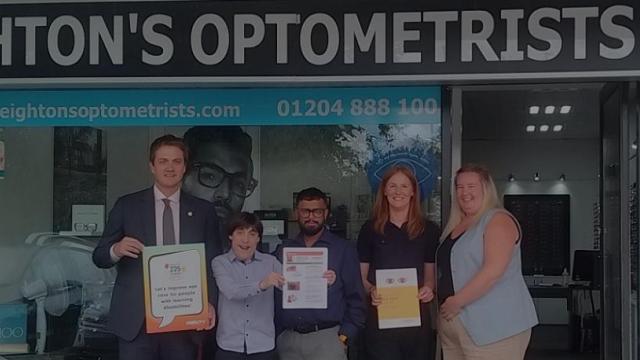
James Frith MP casts his eyes over Easy Eye Care Service for people with learning disabilities and autism