
Call to end healthcare inequalities delivered to Downing Street
Scott Watkin BEM is among a delegation calling on the Prime Minister to improve healthcare for people with learning disabilities after a series of failures to include their needs in NHS plans.
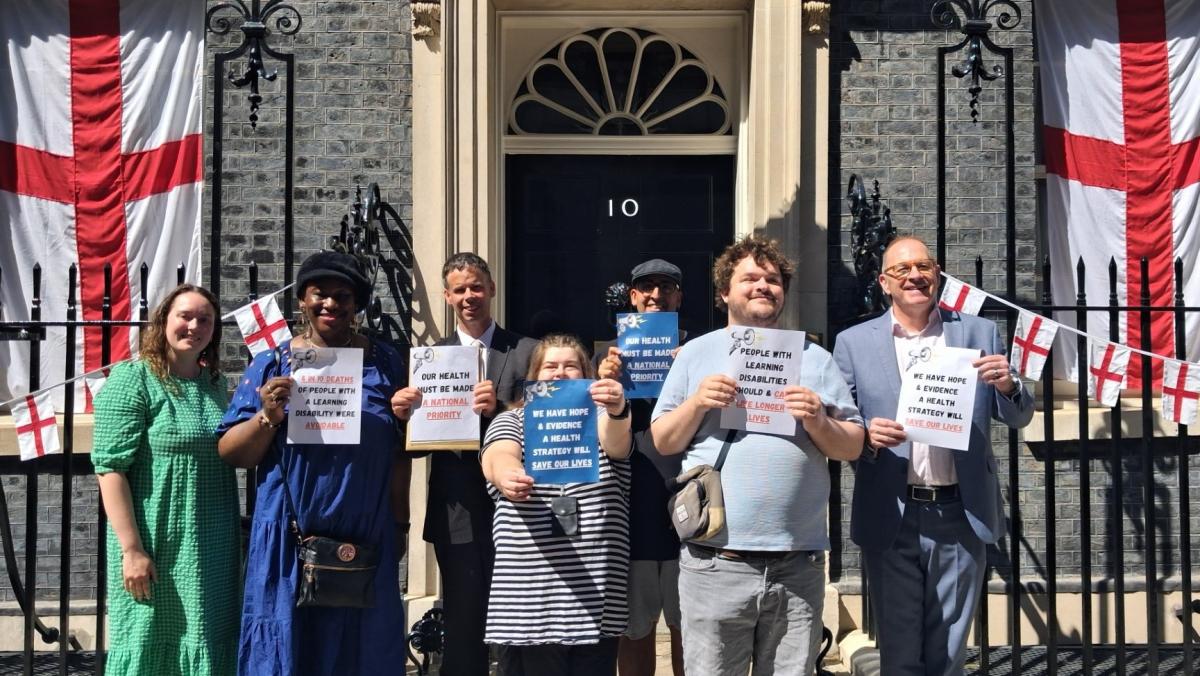
An open letter, organised by Learning Disability England, has today been delivered to the door of Number 10 Downing Street. The delivery has taken place shortly before a new Prime Minister is expected to take office.
With over 1,000 signatures, including 175 organisations, the learning disability community has come together to express dismay that NHS plans are failing to prioritise the health of people with learning disabilities.
It calls for urgent intervention from the next Prime Minister, given the shocking statistic that people with learning disabilities face a 20-year gap in life expectancy, with more than four in 10 deaths avoidable and treatable.
As well as being SeeAbility’s Head of Engagement, Scott is also part of the representative body of Learning Disability England. He was one of the first people with learning disabilities to hold a senior role in the Department of Health, during the government's last strategy for people with learning disabilities - back in 2009.
Lord Scriven, who has been campaigning in parliament to end these avoidable tragedies, was also part of today's delegation.
Scott said:
“Over the last year I’ve become increasingly alarmed that learning disability healthcare is disappearing in NHS plans. The first warning signs were when the NHS 10-year plan came out last year when learning disability got one mention. As more and more NHS guidance has come out, less and less is being said about our lives and our health.
If nothing is being said, then we become even easier to neglect. We can’t wait another 17 years for a government strategy. Whoever steps into Number 10 needs to urgently intervene."
The letter asks for clear NHS standards on care for people with learning disabilities, a plan to tackle the falling number of learning disability nurses, and action on hospitals becoming long-term homes for increasing numbers of people. It also notes that there are examples of good care to build on, but these too need to be part of a national plan rather than a postcode lottery.
One example is the work being done to improve eye care for people with learning disabilities. Terence's story demonstrates the difference this can make. Through SeeAbility's support at one of our partnered special schools, he received his first ever sight test and first pair of glasses at the age of 20. This was made possible through the NHS Special School Eye Care Service.
Children with learning disabilities are 28 times more likely to have a sight problem than other children, but much less likely to be able to access the eye care they need.
Scott added:
"A new learning disability strategy with power behind it is the only way to ensure that all NHS services are focused on closing the gaps, so people with learning disabilities don’t fall through them.”
Further reading
Health Inequalities Open Letter (2026) Learning Disability England
You might also be interested in

Written off and written out: why we need to put learning disability healthcare back into the new NHS
Listen Up! attends the Learning Disability England Conference