
We can't see your child without your consent. Please fill out the form to give consent.
Children with learning disabilities are 28 times more likely to have a serious problem with their sight, but four in ten have never had an eye test.
We know that it can be difficult to fit in another health appointment for your child, so often eye checks can slip down the priority list. We also know that many children with disabilities can struggle to get the support and time they need in high street opticians, and hospital environments can be intimidating and stressful.
That's why we've campaigned for over a decade to bring eye checks to every special school. Today, we are funded by the NHS to provide the Special Schools Eye Care Service, including glasses dispensing, to every special school across London and the South East of England.
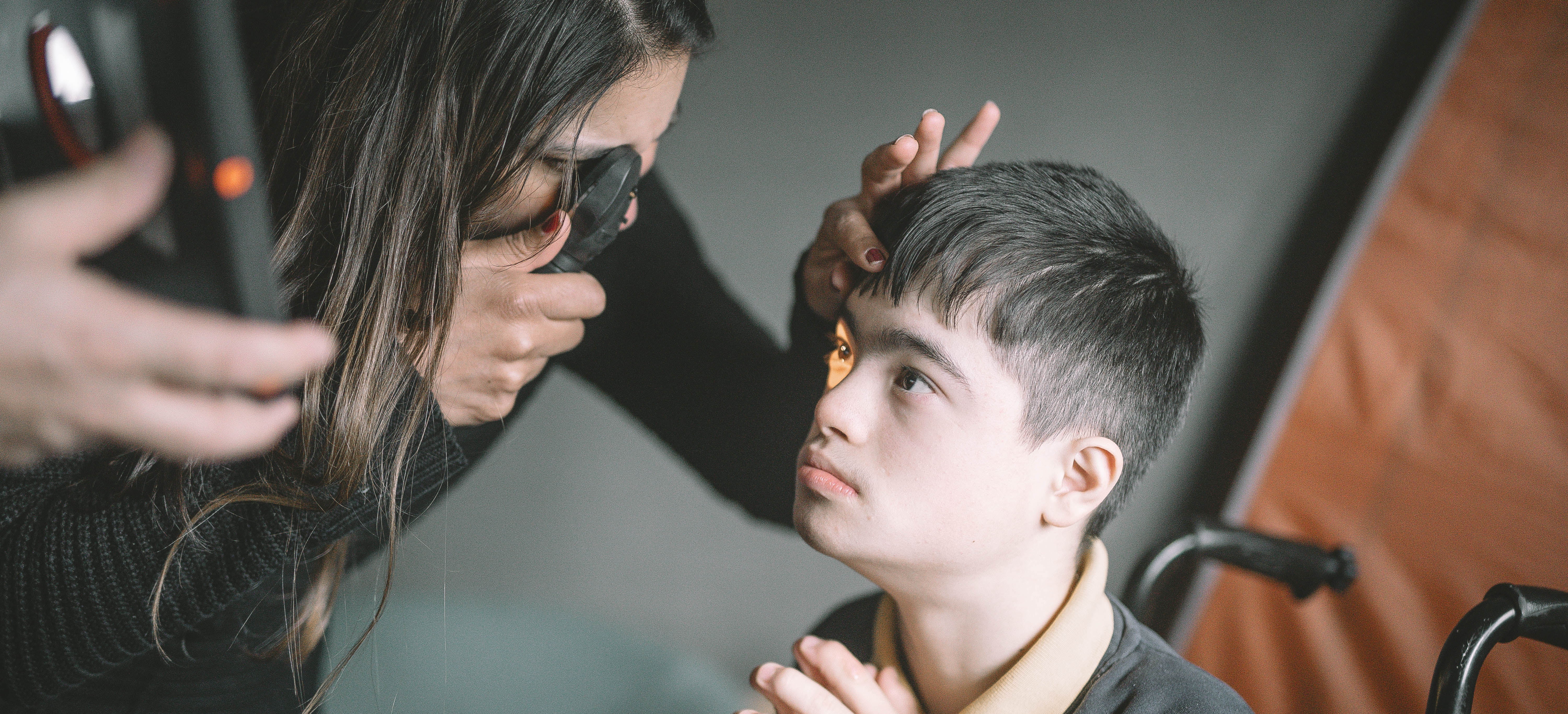
Our one-stop-shop programme, delivered through the NHS commissioned Special Schools Eye Care Service, gives children eye checks in school, glasses where needed, and a report with the outcome of the eye check. Parents, teachers and children will receive a full, plain English report on how their sight impacts their lives, and we will dispense glasses to all children who need them. We’ll continue to see the child, supporting them with any adjustments (such as glasses) and regularly testing their eyes over the course of their education.
Please be aware that you must opt-in to this service. See information below.
We regularly update our page listing all the schools we support. We should be in most schools in London and the South East over the course of 2026-27.
All schools must opt-in to the service. If your special school is in London or the South-East, we’d love to offer our support! Please do get in touch with your school to let them know about the service. You can direct them to our dedicated webpage for schools.
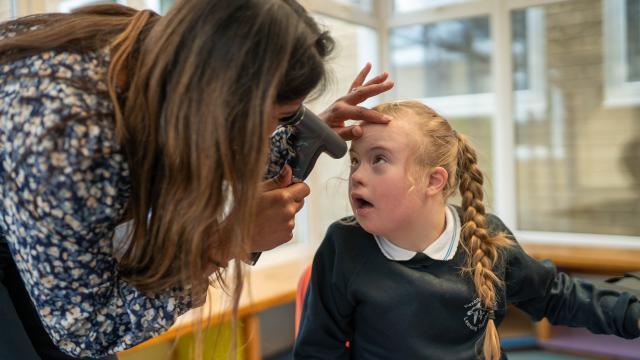
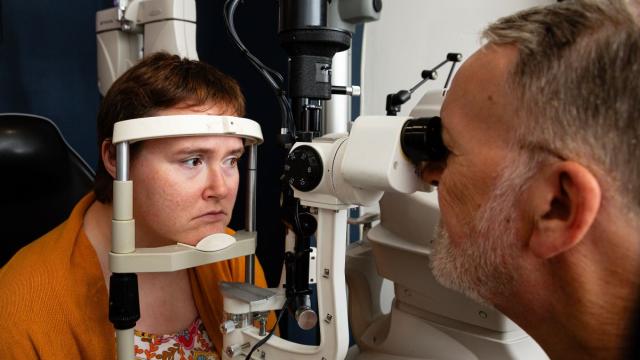
Yes! All children should have an eye test, but especially children with learning disabilities. Our eye tests are fully accessible – children do not need to be able to read, speak or move to complete an eye test. We can get so much information, and can prescribe glasses if needed, just from shining a light into their eyes. Our experienced specialist team knows how to adapt meet every child's needs.
Our eye tests take place in the school, with minimal interruption to the child’s education. For most, that will mean taking them to a quiet room in the school, but if necessary, it would be in the classroom itself. Often, support teachers they know well will support them.
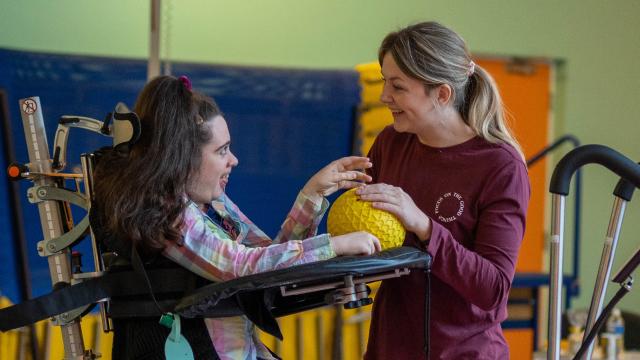
The eye test is different for every child. For many, it will feel like playing a few games, through which we can understand what they can see. For others, it may be as simple as shining a light into their eyes. We take the time to get to know the child, understand how they communicate, and tailor the eye test to their needs. We believe that no child is ‘too disabled’ to have an eye test.
Our experienced team of specialists tailor the eye test to every child’s communication style. We can get so much information, and can prescribe glasses if needed, just from shining a light into their eyes! For many, it will feel like playing a few games, through which we can understand what they can see. We believe that no child is ‘too disabled’ to have an eye test.
Parents, teachers and children will receive a full, plain English report with the outcome of the eye check, a copy the new prescription if glasses are needed, and advice on how best to support each child to make the most out of their vision. We’ll continue to see the child regularly over the course of their education.
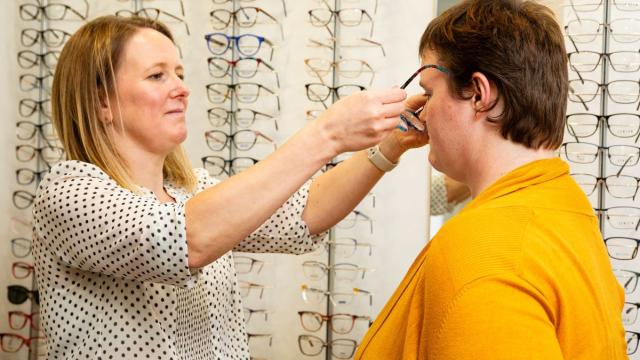
Where a need for glasses is identified, children are provided with robust, high quality glasses, ongoing support to wear the glasses and as many repairs and replacements as are needed.
We offer advice and support to all parents and teachers of a child who requires glasses. Often, children find they enjoy wearing glasses, as they can see the world more clearly! See our information on supporting your child to wear glasses for more tips.
We also give children specialist frames to fit different facial features and frames that adapt to the lifestyle and activity of the child. We know that glasses are often lost or broken, so we provide replacements free of charge.
Please consult your school’s Dispensing Optician for advice on your specific situation.
This will depend on the size of the school and the number of children that are opted into the service, but every child will be seen annually at a minimum, or more frequently if needed.
Our service is provided fully free of charge through the NHS. All glasses, and any repairs and replacements of glasses provided by SeeAbility will be free of charge. Should you wish to get glasses elsewhere, the eye care team will provide you with a voucher code that can be used at a high street practice.
We do not offer eye tests after a child has left school, but we are working with opticians across the country to provide accessible eye care. These are called Easy Eye Care Pathways.
We also have a Find an Optometrist tool on our website, through which you can find opticians across the country that fit your support needs.
Our eye care resources provide easy read information to support people with learning disabilities on everything from the eye test itself to specific eye conditions.
You can contact our Special Schools Eye Care Team by calling 01372 755068.
We can't see your child without your consent. Please fill out the form to give consent.