
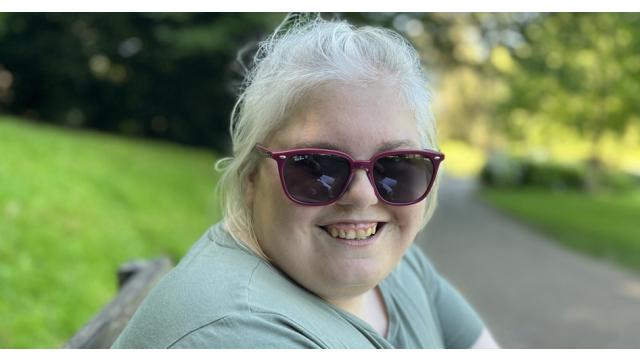
Lucy Thirkettle
What do people like and admire about you?
People say that I am a thoughtful and caring person, with a good sense of humour. This helps me in my role as an Associate to really think about how easy reads should be written and support people to understand things that they normally would not.
It’s better for me if people talk to me in an understandable way, without using long words, and speaking clearly is so important. I will tell you if I cannot understand you.
What’s important to you?
Public transport is very important to me, and I am being supported to get around independently. I do catch buses on my own and I love to shop and learn new routes. I want to be able to visit my friends and family on the bus on my own and am learning to do this.
Family is important to me and meeting up with them makes me happy. I am very sociable and meeting up with people is part of my life.
Going on holiday is the best thing ever, it makes me happy and meeting new people on holiday is my favourite thing to do.
What is something that you think needs changing to improve the lives of people with learning disabilities, autism and sight loss?
I believe that easy read bus timetables could be the start of something great for people with learning disabilities, autism and sight loss.
These would be much easier to read than the complicated timetables that exist now. It would help a lot of people if these timetables were in easy read. This would cut down on the time that it takes for me to read a timetable, as it is very confusing and the size of the font is way too small. There needs to be conversation with national public transport companies to bring this to reality. I also want to speak to my local MP about it and am considering starting a petition.
Why is it important to you that people with disabilities make their voice heard?
So that we can be treated equally and that things can be done to change our lives for the better.
I am involved in a research group around public transport, and I have spoken at university sessions presenting to learning disability nursing students about the importance of improving appointments and how we wish to be treated and listened to. I share my life experience with them.
It's important to spread the word about hospital passports and the importance of the professionals reading them before an appointment. Professionals need to talk to me and ask me questions rather than asking my support.
If you could make one big change to make the lives of people with disabilities easier, what would it be?
Pictures and symbols are an excellent way to communicate and a more understandable way of communicating for some people. People need to speak more clearly when talking in public and understand that not everyone can talk or communicate in that way. Raising awareness of different ways of communicating is so important. It would be much easier to travel independently and see the world in a different way, and be much more inclusive.
What are your biggest strengths that will help you in this role?
I care about people, and how they feel is important me. I talk to people and find out what is important to them and what they need to happen to make their life better. I am already doing this in my role as an Associate.
I believe that I am skilled at talking to people and campaigning. I want to talk to more professional people in the medical profession and more nurses and get our voices heard and campaign to raise our voices as a team to improve people’s lives and for them to have a good life.
You might also be interested in
Listen Up!