

Research and reports
For over a decade, SeeAbility has been working to improve eye care for people with learning disabilities in England. We have been campaigning for national change so that adults and children with learning disabilities experience a more inclusive system of eye care.
We have published and contributed to research which demonstrates that adults with learning disabilities are 10 times more likely to have a sight problem, and children are 28 times more likely. These statistics are now part of government publications and are in wide use nationally and internationally.
The reports and documents below provide a more detailed look at our work.
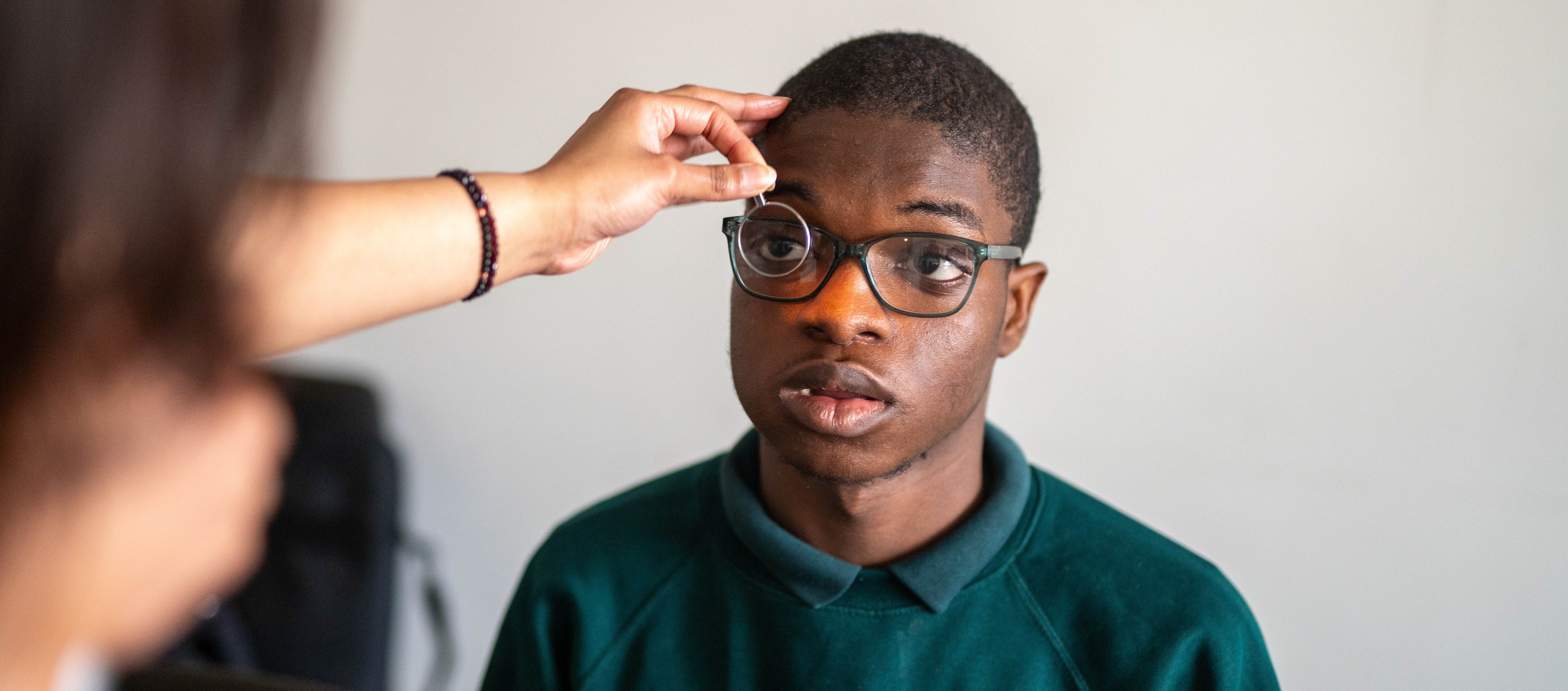
Reports and evidence produced by SeeAbility
Over the years, we have produced a range of reports that highlight inequalities in eye care and and support improvements to services and policy.
Children in Focus 2019 – A Change in Sight
Since 2013 SeeAbility has been delivering specialist sight tests in a number of special schools. This report looks back on our last six years of work and celebrates the NHS's pledge to introduce sight tests in special schools from 2020 onwards.
Full report: Children in Focus 2019 - A Change in Sight
Easy read version: Children in Focus 2019 - A Change in Sight
For more about our work in special schools and our peer reviewed research, please visit our dedicated special schools page.
Delivering an equal right to sight (2016)
People with learning disabilities experience an alarmingly high level of sight problems and yet they are much less likely to get the eye care they need. In this report, launched in parliament, we showcased some of the great work that is happening.
Full report: Delivering an equal right to sight
Easy read report: Delivering an equal right to sight
Large print report: Delivering an equal right to sight
Learning disabilities eye care pathway – Tri-Borough London pilot (2015)
This report details the results of a pilot eye care pathway for adults with learning disabilities across a Tri-Borough area in London and finds a high level of eye care needs amongst adults tested.
Full report: Learning disabilities eye care pathway
The Estimated Prevalence of Visual Impairment among People with Learning Disabilities in the UK (2011)
Funded by SeeAbility and RNIB, and written by Eric Emerson and Janet Robertson of the Improving Health and Lives Learning Disabilities Observatory at the Department of Health, this research shows that adults are 10 times more likely to have a sight problem than other adults, with six in ten needing glasses.
Full report: The Estimated Prevalence of Visual Impairment among People with Learning Disabilities in the UK
Recent peer-reviewed research
Alongside our reports, we contribute to peer-reviewed research to strengthen the evidence for improving eye care.
British Journal of Visual Impairment (2025)
Our research shows that providing sight tests and glasses in special schools is highly valued by parents and improves access to eye care.
Full report: Parental satisfaction with a special schools eyecare and spectacle dispensing service
British Journal of Learning Disabilities: Special Health Inequalities Edition (2024)
Our research highlights the eye health inequalities experienced by people with learning disabilities and sets out evidence-based solutions for change - both at the policy level and in practice through lived experienced and peer support.
Full report: A review of the evidence that people with learning disabilities experience eye health inequalities
Full report: The role of lived experience eye care champions in improving awareness and access to eye care services
Eye Journal (2022): Integrated Eye Care Pathways
We’ve developed practical guidance for integrated eye care pathways, helping ensure people with learning disabilities receive the right support in the right place.
Full report: Referral thresholds for an integrated learning disability eye care pathway: a consensus approach
PLOS One Journal (2019): Findings from an opt-in eye examination service in English special schools. Is vision screening effective for this population?
We analysed clinical data from nearly 1,000 children who received eye care through SeeAbility's special schools service, making it the largest global study at the time into the eye care needs of this group.,
Guidance and resources we have developed or contributed to
We also contribute to national guidance and practical resources to support professionals and improve eye care services.
Sight Advice FAQ website - adults with complex needs section (2021)
We have provided our information to the Sight Advice FAQ website in their section about adults with complex needs. This website is produced by RNIB, Guide Dogs, Visionary, VICTA, Fight for Sight and the Macular Society. See our advice on the Sight Advice FAQ website.
Atlas of variation in risk factors and health care for vision in England (2021)
This Office for Health Improvement and Disparities interactive publication helps map numbers of people with learning disabilities in areas of England, alongside eye health risk factors, in order for better commissioning of services. There is a dedicated chapter on learning disability. You can view the interactive atlas and full report online.
Eye care and people with learning disabilities: Making reasonable adjustments (2020)
This Public Health England report highlights the barriers people with learning disabilities face when accessing eye care and sets out practical ways services can make reasonable adjustments to improve access and outcomes.
Full report: Eye care and people with learning disabilities - making reasonable adjustments
LOCSU eye care pathway for people with learning disabilities (2020)
Information to support the commissioning of a pathway was refreshed in 2020 and information on how to commission and set up a pathway can be found on the LOCSU member area. More information on where the pathways are located can be found on our eye tests page.
Framework for provision of eye care in special schools (2016)
Clinical framework for special schools eye care by SeeAbility, Association of British Dispensing Opticians, British and Irish Orthoptic Society, College of Optometrists, Local Optical Committee Support Unit (LOCSU) and Royal College of Ophthalmologists.
Full report: Framework for provision of eye care in special schools in England
Wider sector research and professional guidance
We work with partners across the sector to support research and professional guidance that helps improve care and reduce inequalities.
Wessex Voices: Improving eye care across Wessex (2020)
This report, commissioned from Wessex Voices (Healthwatch) by NHS South East and supported by SeeAbility, explores the experiences of people with learning disabilities and their supporters when accessing sight tests and eye care, and identifies how services can improve across Hampshire, the Isle of Wight and Dorset.
Full report: Improving eye care across Wessex
College of Optometrists - Guidance for Professional Practice (2020)
This guidance supports optometrists to adapt their approach when providing eye tests to people with learning disabilities and autism, helping to ensure eye care is accessible and inclusive.
Full resource: College of Optometrists - Guidance for Professional Practice
The Royal College of Ophthalmologists - Eye care for Adults with Learning Disabilities (2015)
This guidance sets out how eye care services can be designed and adapted to better support adults with learning disabilities, including practical ways to improve access and overcome barriers to care.
Full report: Ophthalmic Services Guidance - Eye care for Adults with Learning Disabilities
You might also be interested in
Research, impact and transparency

Advocacy and campaigning