
Going global to deliver a more equal right to sight
Today is World Optometry Day, a chance to talk about why eye care should be available, accessible and affordable for everyone. We are delighted to have a guest blog from optometrist Sonal Rughani who has been taking the message out to an international audience.
Sonal uses her specialist and mentorship skills working in special schools with SeeAbility, she has a Masters in Public Health and also works at RNIB’s low vision centre in London.
When you see how transformative timely access to eye care can be, particularly for those patients at increased risk of sight loss it can turn you into a real champion for change! In my career spanning clinical practice in hospital optometry, the voluntary sector, community practice, and in prevention of sight loss programmes, there is nothing more inspiring than the difference you can make to someone’s life.
So in 2024 I applied to the World Council of Optometry’s Optometry Advocacy and Leadership (OPAL) programme. This advocacy and leadership course mentors Optometrists globally to develop their leadership skills to advocate for improved access to eye care.
Globally, people with learning disabilities face issues such as discrimination, institutionalisation, poverty and poor health. Often those health issues are avoidable, but lack of adequate modified services are significant barriers to the preventative healthcare they need.
Unfortunately, access to eye care is no different including the need for refractive correction – or in layman’s terms, the need for glasses. This lack of eyecare impacts people’s independence and wellbeing directly and fundamentally their human rights The United Nations Resolution calls for governments to commit to the Sustainable Development Goals in eye care to integrate eye health into broader health initiatives.
Working with SeeAbility, I have developed a real passion to improve eye care for people with learning disabilities. This was my focus for my capstone project under the OPAL programme.
An international audience
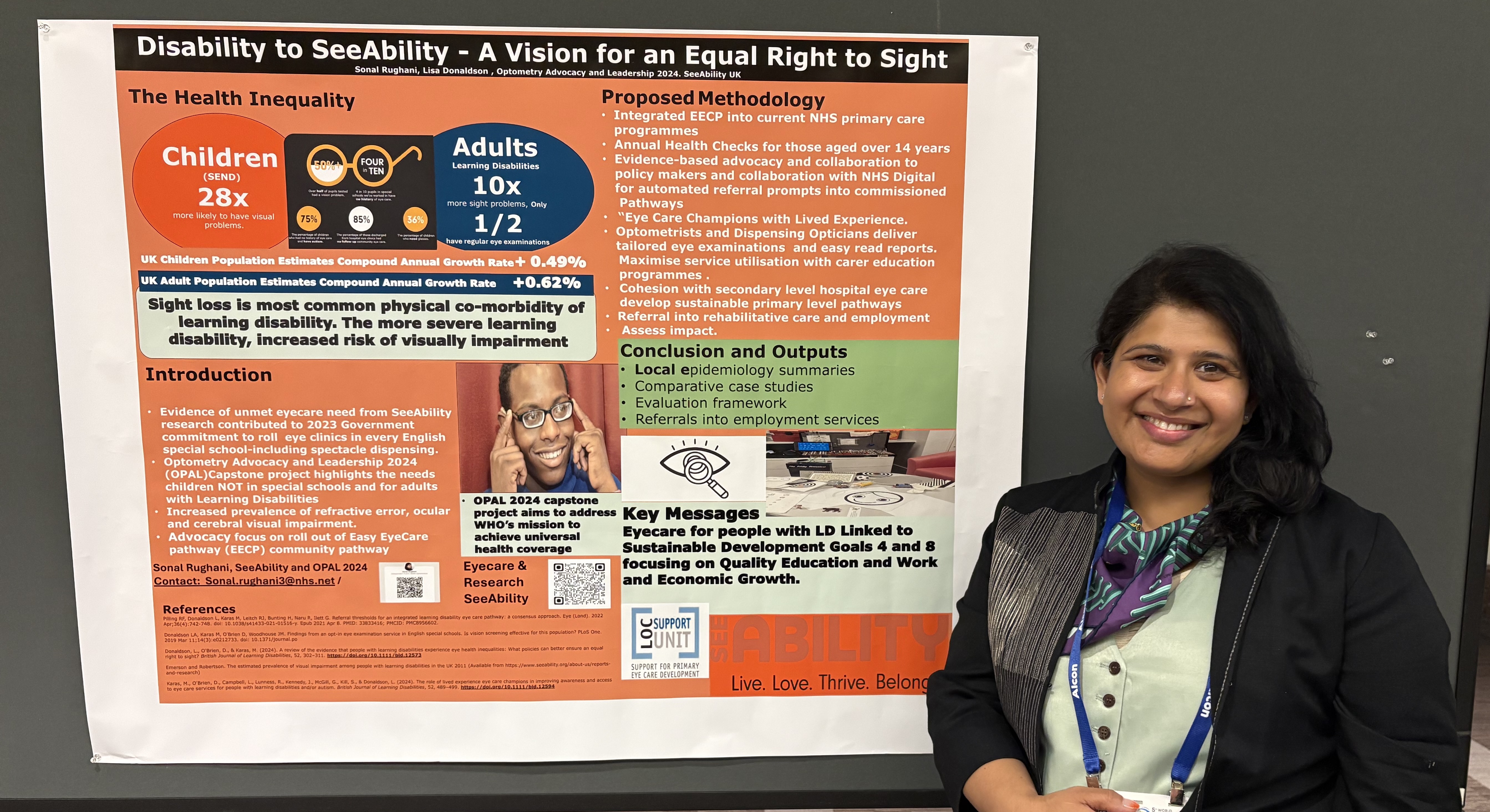
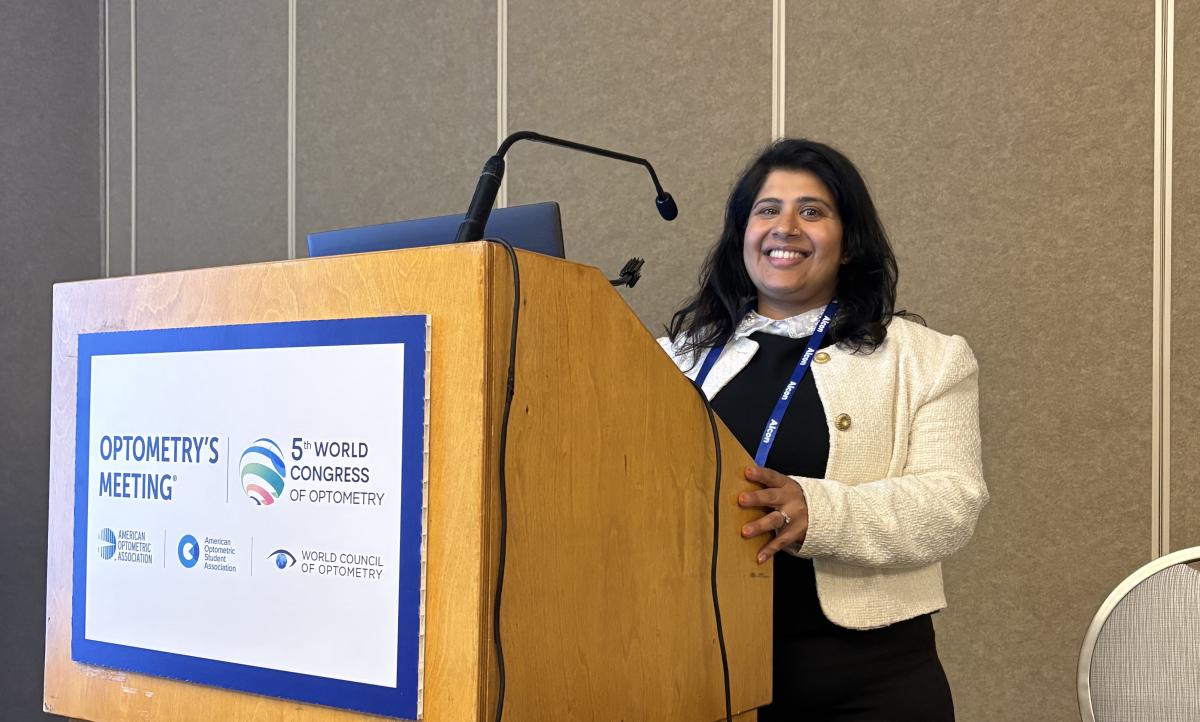
Last June, I was thrilled to be invited to speak at the President’s Forum at the World Council for Optometry meeting in Minneapolis, USA. The theme of the session was accessibility of eye care.
I was able to speak to an international forum about the evidence of the increased risk of significant vision problems amongst people with learning disabilities. This is often poorly understood, yet adults with learning disabilities are 10 times more likely to have a serious sight problem than other adults, increasing to 28 times in children!
Even in health systems in higher income countries, such as England, the lack of population-based targeted programmes mean many people with learning disabilities miss out on simple, low-cost sight-saving eye care.
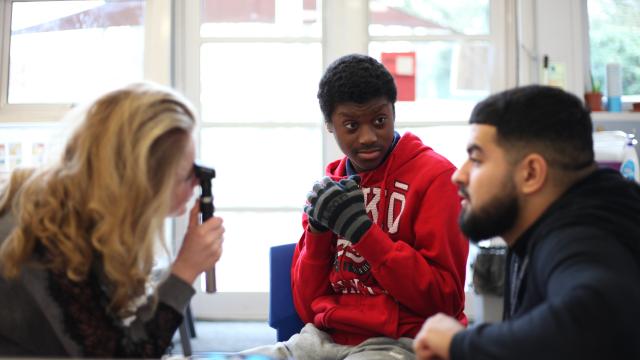
Of the children we see in special schools, half have never had any eye care at all before.
The example of Nathaniel’s first eye test with SeeAbility at aged 14 was received with an audible reaction in the audience. He was thought to be ‘challenging’ because of his behaviour in school. However, Nathaniel could only see a few centimetres before his whole world became a blur. He needed glasses to correct a minus 18 prescription!
The happy ending is that Nathaniel got the glasses he needed, and is thriving at college. However, there must be millions more Nathaniel’s in the world, living with unnecessary sight problems, unable to say if there is an issue.
Our solutions
Every eye care system is different of course, but I believe there are solutions that can be adopted and adapted if need be, across the world. I was able to speak about the work being done here in England, on how groundbreaking it has been to work in special schools, and how this ‘one stop shop’ of eye care is now at the cusp of being rolled out nationwide.
To complement, the establishment of ‘easy eye care’ pathways in community opticians in some areas is reducing barriers to eye care for people with learning disabilities by giving the time, reassurance and adjustments they need.
My colleagues in the Eye Care champions team at SeeAbility are using their lived experience to advocate for change. We can all play our bit in challenging assumptions, raising awareness and supporting eye care professionals with the confidence and skills to advocate for a population that cannot advocate for themselves.
And it is not all one way – there is much to learn from global initiatives, to understand eye care’s social and economic value to the UK.
Empowering people with learning disabilities to have equal access to eye care, education, employment and play an active part in society; the same opportunities as everyone else is so important.
Nathaniel’s story tell us that sometimes it just starts with a sight test.
Sonal Rughani is a specialist public health optometrist with SeeAbility, RNIB and an OPAL 2024 graduate.
You might also be interested in

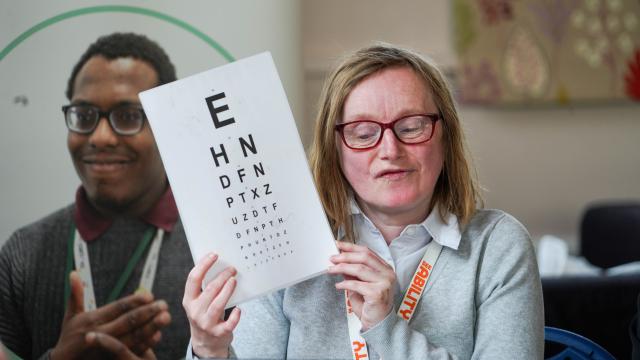
Eye Care Champions and their Every Day in Focus campaign