
A day with our special schools eye care team
Written by Lewis Gordon, Interim Digital Marketing Manager
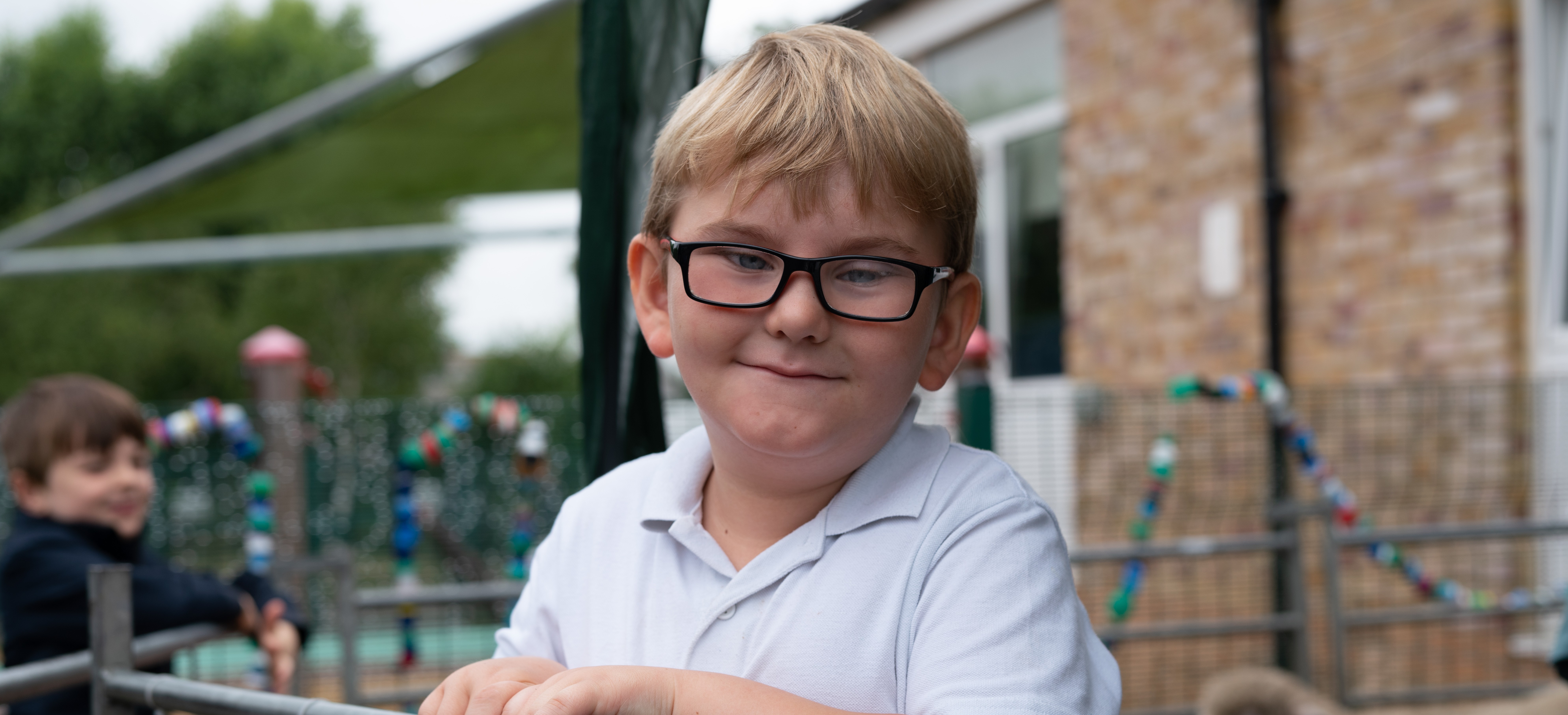
Castlebar Primary School in Ealing is one of 54 SEND schools across London that are supported by our Special Schools Eye Care Team. It specialises in supporting children with special educational needs to have the best start to life possible.
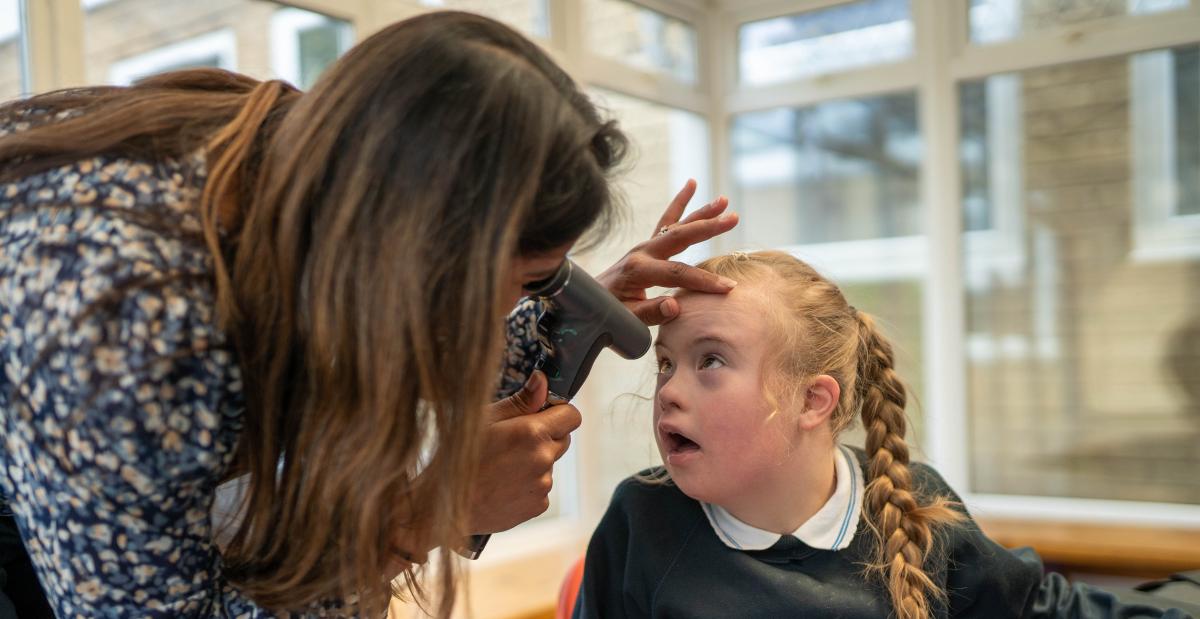
Our team are in and out of the school regularly, checking eye health and levels of vision, measuring the power of the eyes, and fitting glasses when they are needed.
Made up of expert optometrists and dispensing opticians, the team works every day to uncover and address the often-overlooked sensory challenges that children in special schools face.
Developing rapport and lines of communication with teachers and parents is a key part of the work of both the optometrist and the dispensing optician. They support parents and teachers to understand how the eyes work, why glasses are needed and how sight loss can affect children’s learning, mobility and behaviour.
Sonal Rughani, who is visiting the school today, has been an optometrist at SeeAbility for over seven years. Her familiarity with the school is immediately apparent, greeting school staff by name and preparing for the day’s upcoming eye checks in a unique way for each child. The teachers’ insight into the behaviour and preferences of the children is pivotal to enabling a good eye check.
Identifying hidden vision problems
There are many signs that a child with a learning disability or autism may be experiencing difficulty with their vision, the health of their eyes, or even some form of sight loss, but without the keen eye of an optometrist like Sonal, these can be overlooked, misinterpreted, or missed entirely.
Eye rubbing, poking, or screwing the eyes up tightly can indicate blurred or distorted vision where glasses would help.
Before long, the doors to the room burst open, and one of the children she supports comes running in, excited to meet with her. You may think it strange that a child would be excited for an eye check, but that’s a testament to the engaging environments that our Optometrists provide, because it really doesn’t feel like a traditional examination at all.
Making the experience fun
Instead, Sonal has prepared some games and entertaining distractions, with the eye check itself housed within. One of these involves a set of picture cards containing smiley faces, clouds and animals - the child is asked to point out different targets. By pointing rather than speaking, it reduces the need for language to be used – being able to speak isn’t necessary for having an eye check.
Another game includes a 3D vision check card, which gives the illusion of certain images popping out of the page – almost like magic! The children’s faces light up with excitement as they recognise their favourite animals and vehicles.
Games with purpose
While the activities are playful, every game has a deeper purpose. As the child points to pictures and reacts to the images that appear to pop out from the page, Sonal is building a picture of how they are seeing the world.
At first glance, everything seems to be going well. Up close, the child responds quickly and accurately, correctly identifying each image. However, when Sonal gently adjusts the distance, very subtle changes begin to occur – slight hesitation, guessing, and uncertainty about what they are seeing.
This could easily be mistaken for boredom or getting distracted - but what Sonal recognises is a genuine difficulty with seeing at a distance. In a classroom setting, it’s easy to imagine how this might be misinterpreted as misbehaving or a simple lack of interest, when, in reality, a child may be unable to see the whiteboard or follow what’s being taught.
“What can look like distraction, or a lack of interest, is sometimes a child trying to cope with what they can’t see.” - Sonal Rughani, Optometrist at SeeAbility
Trust and familiarity
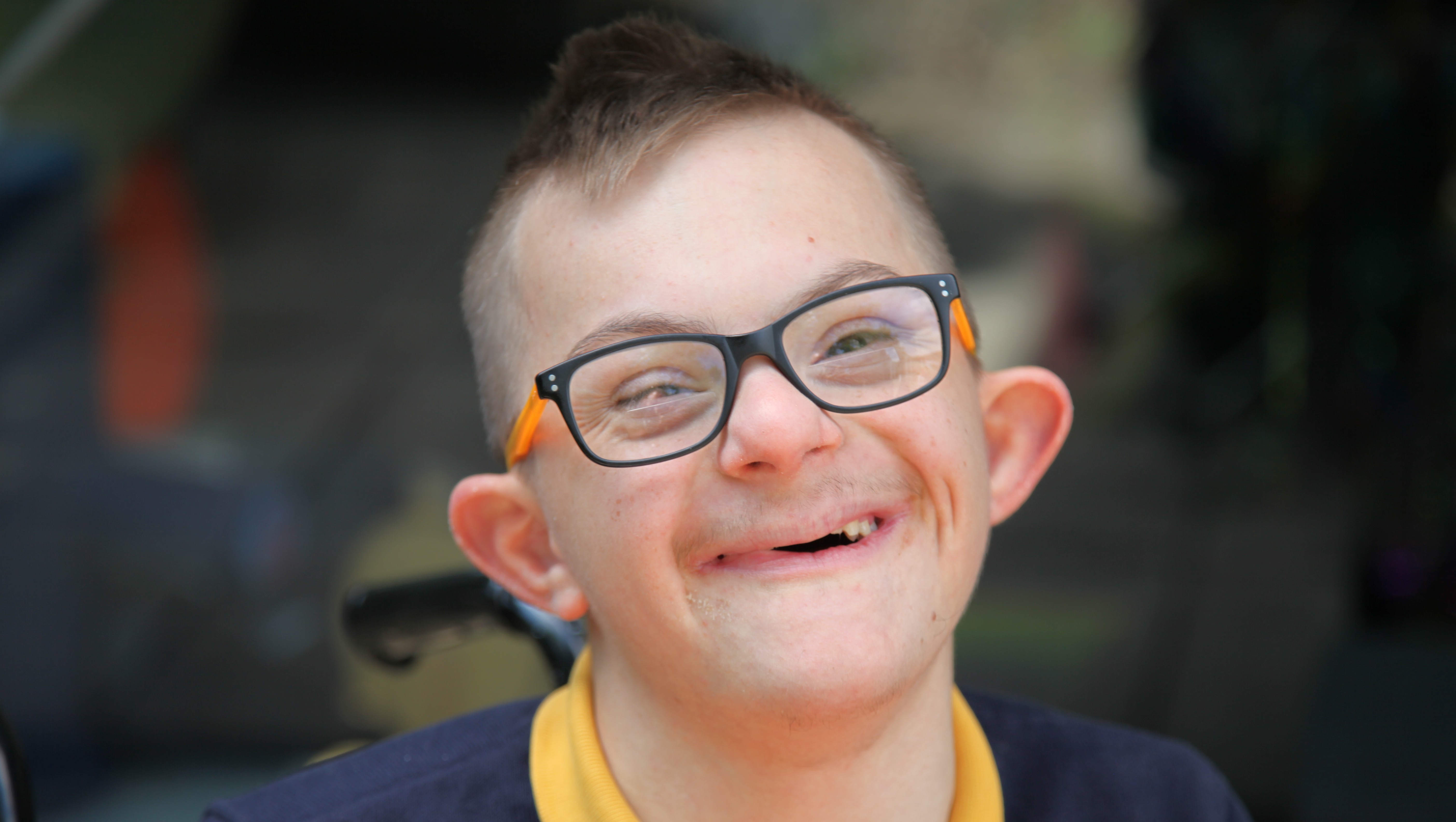
Because Sonal is a familiar presence in the school, these moments are easier to spot. Children are more relaxed, supported by school staff that they know, and free to be themselves in a low-pressure environment. And once these underlying issues are spotted, they can often be remedied with the aid of glasses, with our Dispensing Opticians tailoring the glasses to fit the needs of each child – even down to their favourite colour!
For children like those at Castlebar, having eye care delivered at school can be transformational. It removes barriers, builds trust, and ensures that sight problems are identified much earlier in life, at a time when preventative measures can be taken.
By taking a completely fresh approach to eye care, our Special Schools Eye Care Team are removing barriers for children with learning disabilities and autism to enjoy their school years as we all should – with vision, clarity, and equitable opportunities.